

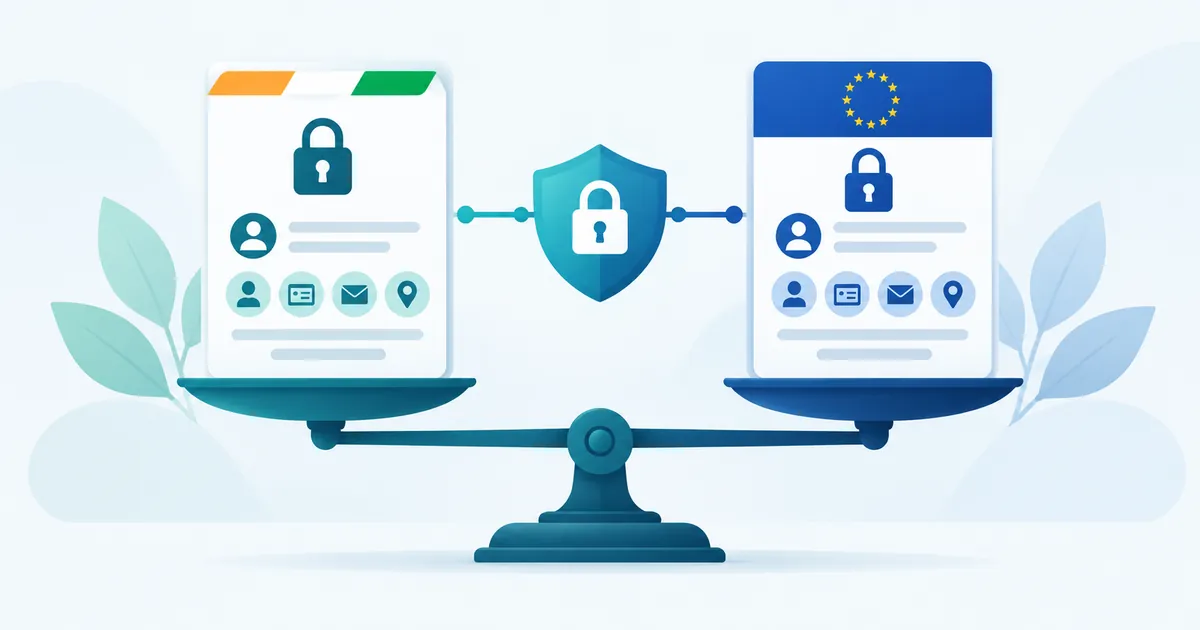
Side-by-side comparison
| Topic | DPDP Act 2023 (India) | GDPR (EU) |
|---|---|---|
| What data | Digital personal data (including paper data later digitised) | All personal data, digital or paper |
| Roles | Data Fiduciary, Data Processor, Data Principal | Controller, Processor, Data Subject |
| Legal basis | Consent, or specified "legitimate uses" | Six lawful bases, including legitimate interests |
| Sensitive data | No separate special category | Special categories with extra protection |
| Children | Under 18; verifiable parental consent needed | Under 16 by default (member states may lower to 13) |
| Breach reporting | To the Data Protection Board and to each affected person | To the supervisory authority within 72 hours, and to individuals if high risk |
| Higher obligations | Significant Data Fiduciaries: DPO based in India, DPIAs, audits | DPO and DPIAs based on processing activities |
| Penalties | Up to ₹250 crore per instance | Up to €20 million or 4% of global annual turnover |
| Regulator | Data Protection Board of India | National supervisory authorities |
What this means in practice
- If you already comply with GDPR, you have a head start, but you still need DPDP-specific notices, consent flows, the "legitimate uses" analysis and the Indian breach reporting process.
- If you're starting with DPDP, building to GDPR standards (records of processing, DPIAs, vendor contracts) makes future EU business easier.
- Children's data needs special care under DPDP, because the age threshold is 18.
Building one program for both
- Map personal data across systems and vendors once.
- Write one privacy policy framework with India and EU annexes.
- Use consent and notice templates that meet both laws.
- Run one breach response process with both reporting routes.
- Review vendor contracts against both laws.
For the India side, start with our DPDP compliance checklist.