

A HIPAA risk assessment, which the Security Rule calls a risk analysis, is the starting point for every other HIPAA safeguard. If you create, receive, maintain or transmit electronic protected health information (ePHI), you need one. This guide walks through the eight steps, how often to repeat them and the mistakes that slow teams down. For hands-on help, see our HIPAA compliance consulting page.
We use "risk assessment" and "risk analysis" interchangeably below, because most people search for the first term and the rule uses the second.
What does the HIPAA Security Rule require for risk assessment?
The Security Rule requires a risk analysis under §164.308(a)(1)(ii)(A): an accurate and thorough assessment of the potential risks and vulnerabilities to the confidentiality, integrity and availability of the ePHI you hold. It must be followed by risk management, meaning you put security measures in place that reduce those risks to a reasonable and appropriate level.
The risk analysis sits inside the administrative safeguards (§164.308), but it shapes the physical (§164.310) and technical (§164.312) safeguards too. Many safeguards are "addressable", and the risk analysis is how you justify what you implemented for each one, or why an alternative is reasonable for your organisation.
Two points matter in practice:
- It applies to covered entities and business associates. A vendor that handles PHI for a covered entity is a business associate and needs its own risk analysis, not just its customer's.
- It must be documented. Keep the analysis, the risk management plan and the decisions behind them for six years (§164.316).
How do you run a HIPAA risk assessment step by step?
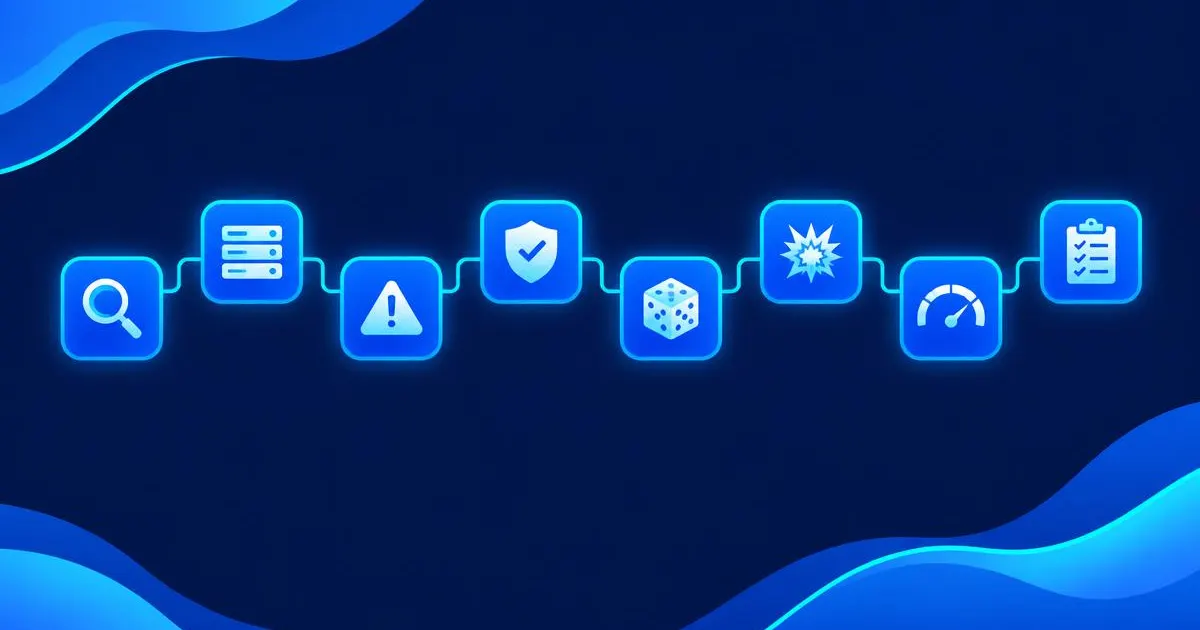
Run it in eight steps: scope the ePHI, build an inventory, identify threats and vulnerabilities, review current controls, rate likelihood, rate impact, combine them into a risk rating, and write a risk management plan. Each step produces a record, so the finished assessment shows assessors and customers exactly how you reached every conclusion.
Step 1: Scope the ePHI
Find every place ePHI is created, received, stored or sent: your application, databases, backups, logs, analytics tools, email, support tickets, laptops and any vendor that touches it. Draw a simple data flow. Scope is where most assessments go wrong, because PHI tends to leak into systems nobody thought of, such as error logs or a shared drive.
Step 2: Build an asset inventory
List the systems, applications, devices, cloud services and people in scope. For each asset, note an owner, where it lives and what ePHI it holds. A current inventory makes every later step faster and is the first thing many assessors ask to see.
Step 3: Identify threats and vulnerabilities
For each asset, list what could go wrong (threats) and the weaknesses that would let it happen (vulnerabilities). Think broadly:
- People: phishing, misuse of access, mistakes by staff.
- Technology: unpatched systems, weak authentication, misconfigured cloud storage.
- Environment: power loss, a lost laptop, a data centre outage.
- Vendors: a subcontractor with weak controls.
Step 4: Review current controls
Record the safeguards already in place against each threat, such as access controls, encryption, logging, backups, training and policies. Be honest about how well each one actually works. A policy nobody follows is not a control.
Step 5: Rate likelihood
For each threat and vulnerability pair, estimate how likely it is to happen given your current controls. A simple scale such as low, medium and high is enough, as long as you define each level and apply it consistently.
Step 6: Rate impact
Estimate the harm if it did happen: to patients, to your customers, to the availability of your service and to your business. Use the same kind of defined scale.
Step 7: Assign a risk rating
Combine likelihood and impact into a risk level, often with a simple matrix:
| Likelihood / Impact | Low impact | Medium impact | High impact |
|---|---|---|---|
| High likelihood | Medium | High | High |
| Medium likelihood | Low | Medium | High |
| Low likelihood | Low | Low | Medium |
The matrix is a tool, not a rule. Adjust it to fit your organisation, then write down the scale you used so the next assessment is comparable.
Step 8: Write the risk management plan
For every risk above your acceptable level, decide what to do: reduce it with a new or stronger safeguard, transfer part of it, avoid it by changing a process, or accept it with a documented reason. Give each action an owner and a target date. This plan is the risk management half of the requirement, and it is the part assessors read most closely.
When should you repeat or update the risk assessment?
The Security Rule does not set a fixed interval. It expects the analysis to stay accurate, so review it regularly and whenever something significant changes: a new product or system, a move to a new cloud provider, a major vendor, an acquisition or a security incident. Many organisations review it at least once a year.
A practical rhythm looks like this:
- Ongoing: update the asset inventory and risk register as systems change.
- Periodically: review the full analysis and risk management plan with leadership.
- After events: reassess affected areas after an incident or a major change.
HHS proposed a major Security Rule update in January 2025 that would add more specific requirements, including asset inventories. It is still only a proposal. See the proposed HIPAA Security Rule update for where it stands.
What are the most common HIPAA risk assessment mistakes?
The most common mistakes are scoping too narrowly, treating a questionnaire as the analysis, skipping the risk management plan and never updating the document. Each leaves gaps an assessor or customer will find. CyberWave GRC sees these often in gap assessments, and each one is easier to fix early than in front of an assessor.
- Missing ePHI locations. Logs, backups, test data and support tools are left out of scope.
- Checklist instead of analysis. A list of yes or no answers is not an assessment of likelihood and impact.
- No risk management plan. Risks are rated but nobody owns the fixes.
- Out of date. The analysis describes last year's systems.
- No vendor risk. Business associates and subcontractors are ignored.
- No evidence. Decisions about addressable safeguards are made but not written down.
What should the finished risk assessment include?
A finished HIPAA risk assessment should include the scope and data flows, the asset inventory, threats and vulnerabilities for each asset, current controls, likelihood and impact ratings with the scale you used, a risk rating for each item and a risk management plan with owners and dates. Keep it with your other Security Rule documentation.
Customers and assessors will usually ask for a summary rather than the full file. Prepare a short version that explains your method, the main risks and the status of the plan. If you are getting ready for an independent assessment, our free HIPAA Security Rule evidence checklist lists what assessors typically ask for, and the HIPAA compliance checklist covers every requirement.
How does the risk assessment fit into HIPAA compliance?
The risk assessment is the foundation of HIPAA compliance. It decides which safeguards you need, how strong they must be and what to fix first. Policies, training, technical controls, vendor agreements and breach response all trace back to it, and an independent assessor will usually start their review by reading it.
At CyberWave GRC, a HIPAA engagement starts with a gap assessment and risk analysis, followed by guidance, templates and remediation support. The independent assessment report is then prepared by an assessor who did no readiness work for that client. If you also sell to customers who want a SOC 2 report, see HIPAA vs SOC 2 for how to build one set of controls for both.