

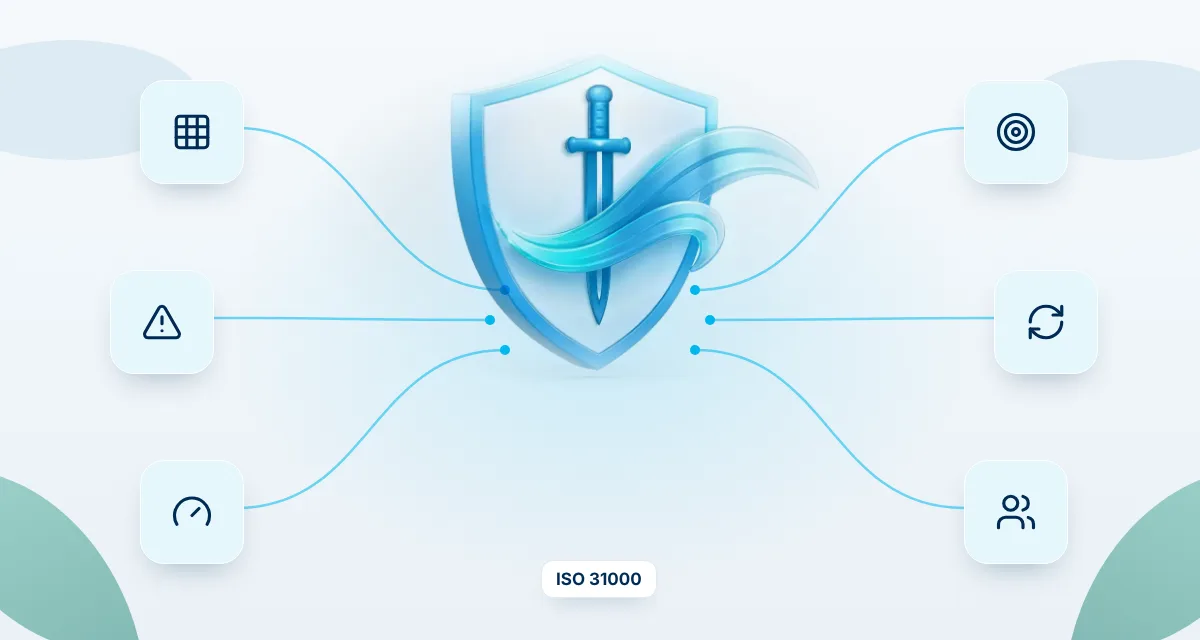
The three parts
Principles. Risk management should be integrated, structured and comprehensive, customised, inclusive, dynamic, based on the best available information, take account of human and cultural factors, and improve continually.
Framework. Leadership and commitment, then integration, design, implementation, evaluation and improvement of risk management across the organisation.
Process.
- Scope, context and criteria
- Risk assessment: identification, analysis and evaluation
- Risk treatment
- Monitoring and review
- Communication and consultation
- Recording and reporting
ISO 31000 compared with other risk standards
| ISO 31000 | ISO/IEC 27005 | COSO ERM | |
|---|---|---|---|
| Scope | Any risk, any organisation | Information security risk | Enterprise risk, linked to strategy and performance |
| Certifiable? | No, guidance | No, guidance supporting ISO 27001 | No, a framework |
| Typical users | Enterprise risk teams, public sector, any industry | ISMS owners | Boards and finance-led organisations |
Implementing it
- Get leadership to agree risk appetite and criteria.
- Define roles: risk owners, a risk function and oversight.
- Build a risk register with consistent likelihood and impact scales.
- Assess and treat risks, and track treatments to completion.
- Report regularly to management and the board.
- Review and improve the framework each year.
Why use it if it isn't certifiable?
It gives one consistent way to manage risk across the business, and it feeds the risk requirements in ISO 27001, ISO 9001 and many regulators. Compare providers in our best ISO 31000 consultants guide.