

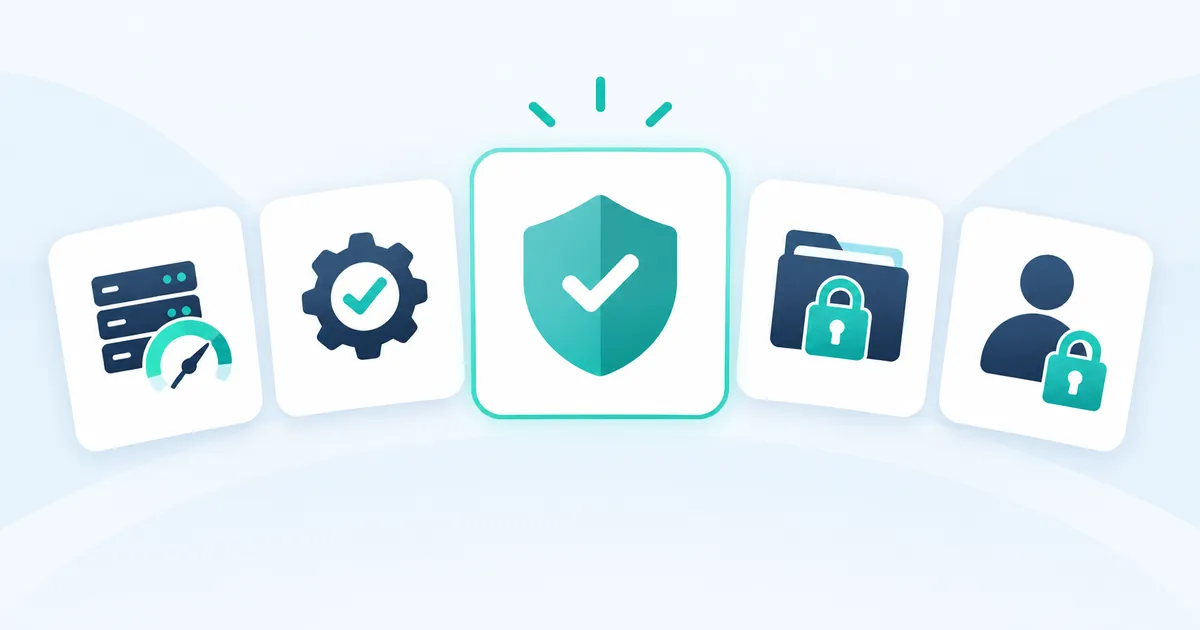
The five criteria
| Criterion | Required? | Covers | Usually added when |
|---|---|---|---|
| Security (Common Criteria) | Always | Protection against unauthorised access, change management, monitoring, incident response, vendor risk | Every SOC 2 report |
| Availability | Optional | Uptime, capacity, backups, disaster recovery | Customers depend on your uptime or you have SLAs |
| Confidentiality | Optional | Protecting confidential business information | You handle customers' sensitive business data |
| Processing Integrity | Optional | Complete, accurate, timely processing | You process transactions, payments or payroll |
| Privacy | Optional | Collection, use and disposal of personal information | Personal data is central to your service |
How to decide
- Read your customers' security questionnaires and contracts. They often say which criteria they expect.
- Start with Security, plus Availability if uptime matters to your customers. That combination covers most B2B SaaS deals.
- Add Confidentiality if you store customer business data such as documents, source code or financial records.
- Add Processing Integrity only if accuracy of processing is your core promise.
- Be careful with Privacy. It's the heaviest criterion, and many companies cover privacy needs better with GDPR, DPDP or ISO 27701.
Can you add criteria later?
Yes. Many companies start with Security for their first Type 1 or Type 2 report and add Availability or Confidentiality in the next period, once the core program is stable.
Each criterion you add affects the SOC 2 audit cost. Our SOC 2 compliance checklist shows the controls to have in place first, and our SOC 2 consulting page explains how we run the full program.