

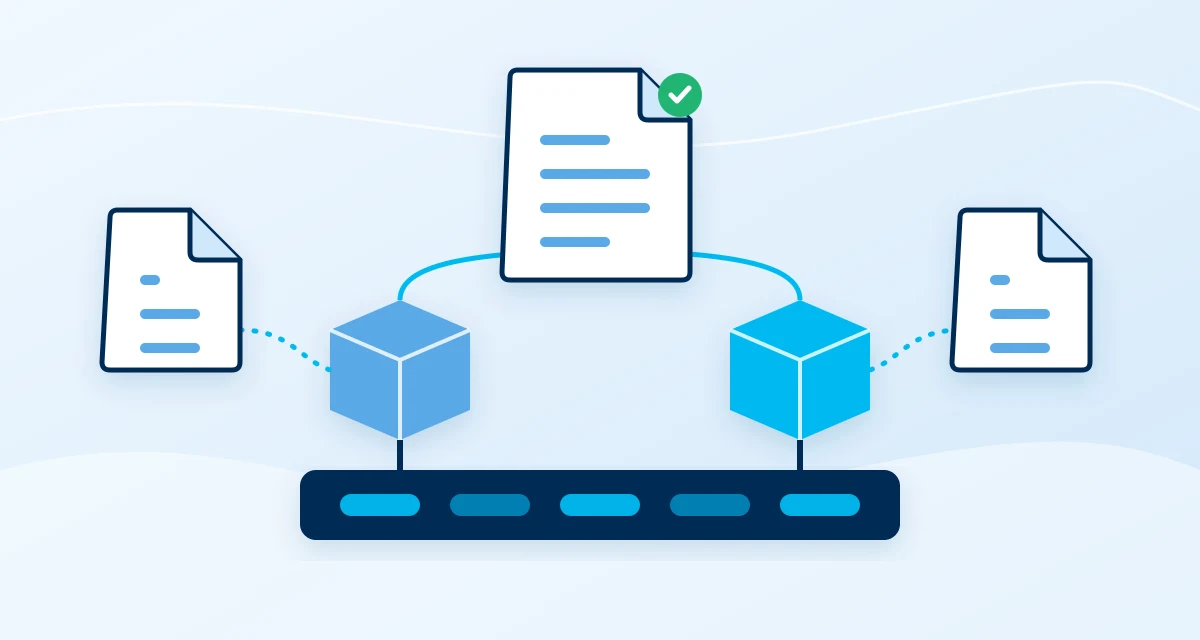
A SOC 2 report covers a system, not a company
A SOC 2 report describes a system: the services you provide and the infrastructure, software, people, procedures and data behind them. The system description names the service organisation and the services in scope, and the CPA firm's opinion covers that system. So the real question isn't "how many companies do we have?" but "how many separate systems are we running?"
Three ways to scope it
One report for the whole group. Works when the entities share one platform, one engineering and operations team, one set of policies and the same controls. The description names every entity involved and what each does.
Separate reports for each entity or product. Works when products run on separate infrastructure with separate teams, or when entities came together by acquisition and still operate independently.
Shared services tested once, reused across reports. Large groups often get a report over common services such as HR, IT, access management and security operations, then separate reports for each product. The shared controls are tested once and that testing supports each product report, which cuts the evidence work.
| One report | Separate reports | Shared services plus product reports | |
|---|---|---|---|
| Best for | One platform, one team | Separate stacks or recent acquisitions | Several products on common corporate services |
| Customer experience | One document to send | Each customer gets the report for what they buy | Clear per product |
| Effort | Lowest | Highest | In between |
| Risk | One problem shows up in the only report | A problem stays in one report | Shared-control problems affect every report |
When a group company does the work
A very common setup for Indian SaaS companies: a US entity signs customer contracts while an Indian private limited company builds and runs the product. There are two clean ways to handle this:
- Describe both entities in one system. The report names the US entity as the service organisation and explains the Indian entity's role, and the Indian team's controls are tested directly. This is the usual choice when the teams work as one.
- Treat the related entity as a subservice organisation. Its services are then presented using the inclusive method (its controls are tested and its management signs its own assertion) or the carve-out method (its controls are excluded and described as relying on it). The inclusive method is easier with a related company, because cooperation is a management decision rather than a vendor negotiation.
Whichever you choose, the entity that signs customer contracts should be clearly named, because customers' vendor risk teams check that the report covers the company they're buying from.
After an acquisition
If you buy a company in the middle of a SOC 2 cycle, the simplest path is to keep separate reports while the businesses still run separately, then merge them into one report once the acquired product moves onto your platform, people and controls. Bringing it into your report too early adds controls that aren't yet working the way yours do.
What customers will ask
- Does the report name the legal entity we contract with?
- Is the product we use in scope, and which Trust Services Criteria are covered?
- Are any group companies or vendors carved out, and do they have their own reports?
If the answers are clear in the report, you'll spend far less time on follow-up questions.
What it costs
Each report is a separate engagement with its own CPA fee, so separate reports cost more. Shared-services testing reduces the duplicate work. For a single company in India, our fixed SOC 2 fee is ₹7–10 lakh, excluding GST, including the CPA firm's report; group and multi-product scopes are quoted after a short scoping call.
How CyberWave GRC helps
We map your entities, products, contracts and shared services, recommend one report, separate reports or a shared-services model, and agree it with the CPA firm before the observation period starts. Then we build and test the controls across every team in scope. If you also need ISO 27001, see one ISO certificate or several.
Our audit-ready guarantee: you will pass. For SOC 2, passing means a clean, unqualified report. We don't send you into an audit until you're ready for it, and our team has worked on 200+ SOC 1 and SOC 2 engagements plus ISO and HITRUST audits, so we know what auditors test. If the auditor still raises a finding on anything we implemented, we fix it at no extra cost until it's closed and your certificate or clean report is issued.